


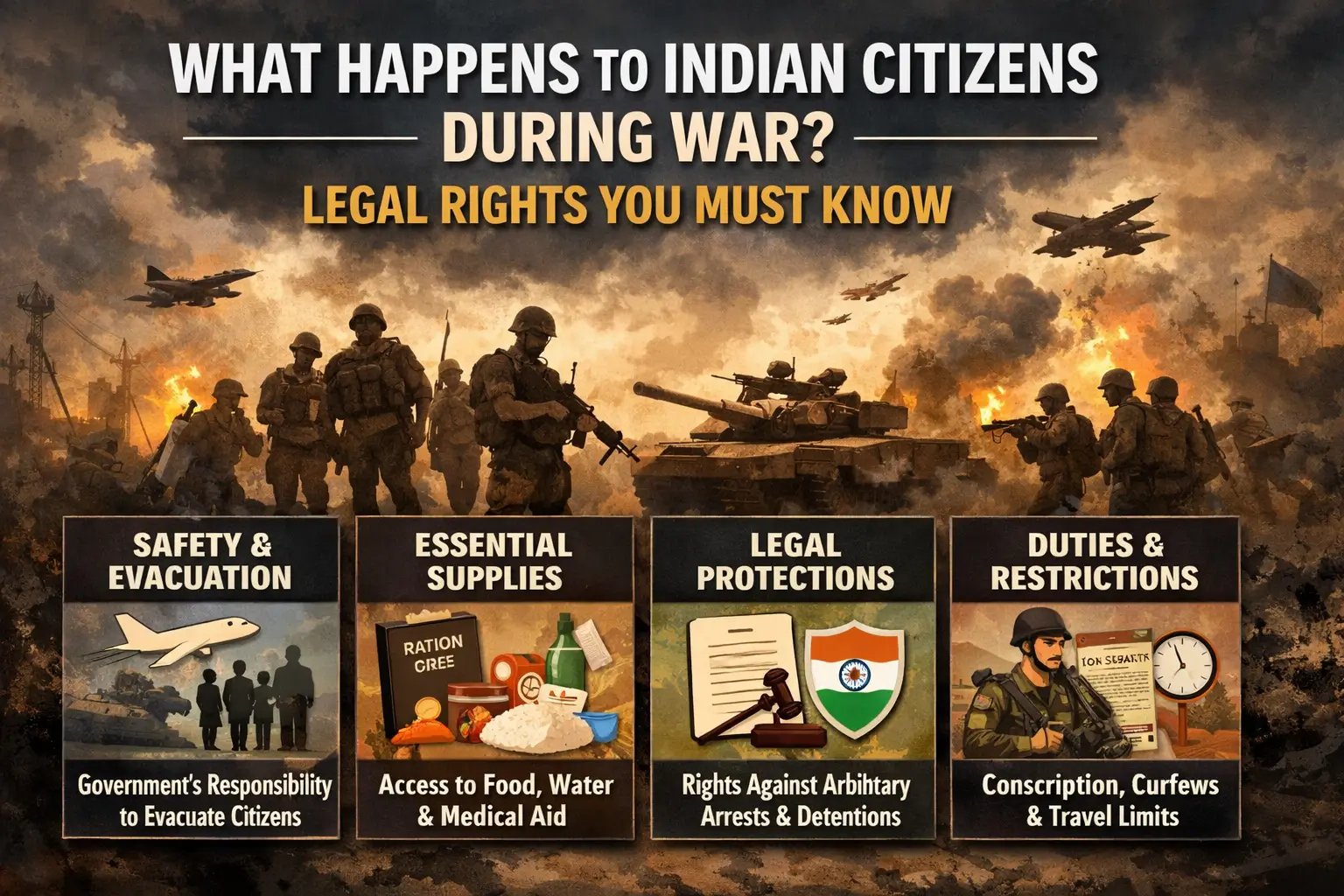
When international conflict escalates, such as tensions involving Iran or strategic locations like Diego Garcia, most Indians focus on safety, evacuation, and survival. What almost no one understands is the legal framework that governs your rights during such situations.
War does not suspend law. It activates a different set of legal protections under international law and Indian legal policy. If you are an Indian citizen abroad during a conflict, your rights, obligations, and risks are defined by a mix of domestic law, diplomatic protocols, and international conventions.
This guide explains how war laws and international law impact Indian citizens, and what you should actually do if you are caught in a conflict zone.
Does Indian Law Protect You Outside India During War?
Indian law does not directly operate outside Indian territory. However, the Government of India has a constitutional and diplomatic responsibility to protect its citizens abroad.
This protection works through:
- Indian Embassies and Consulates
- Ministry of External Affairs (MEA)
- International agreements and diplomatic channels
In war situations, your protection depends less on courts and more on state action and international cooperation.
What International Law Says About Civilians in War Zones
International humanitarian law, particularly the Geneva Conventions, governs how civilians must be treated during armed conflict.
Your Core Rights as an Indian Civilian Abroad
- Right to protection from violence and targeting
- Right to humanitarian assistance
- Right to evacuation where possible
- Protection against arbitrary detention
However, these rights are not always enforced effectively. In active war zones, legal rights exist on paper, but enforcement depends on military control and diplomatic leverage.
What the Indian Government Can Actually Do
There is a gap between what people expect and what the government can realistically deliver.
1. Evacuation Operations
India has conducted multiple evacuation missions (for example, from Ukraine, Sudan, and Afghanistan). These are not legal rights you can demand. They are policy decisions based on feasibility and risk.
2. Diplomatic Intervention
Embassies may negotiate safe passage, temporary shelter, or exit permissions with local authorities.
3. Emergency Documentation
If passports are lost or seized, emergency travel documents can be issued.
But if the region is under active conflict or hostile control, even these measures may be limited.
Legal Risks Indians Face During War
War zones create legal complications most people don’t anticipate.
Visa and Immigration Status
Your visa may become invalid if the host government collapses or suspends administrative functions.
Employment Contracts
Jobs may terminate without notice. Enforcing employment rights during war is practically impossible.
Detention or Suspicion
Foreign nationals are often viewed with suspicion. You may face questioning, detention, or movement restrictions.
Understanding your legal exposure in such situations is critical. You can explore related risks under our Criminal Law Services if detention or legal action is involved.
What Happens If You Are Stuck in a War Zone?
If you cannot exit immediately, your situation becomes a mix of survival and compliance.
Follow Local Laws Strictly
Even during war, local authorities retain power. Violating curfews, checkpoints, or emergency orders can lead to arrest.
Register with Indian Embassy
This is not optional. Embassy registration is your only official connection to Indian authorities.
Avoid Political or Military Involvement
Any perceived involvement can expose you to serious criminal charges under both local law and international law.
Can War Affect Your Legal Status in India?
Yes, indirectly.
- Income disruptions may affect tax filings
- Business operations may collapse due to international sanctions
- Cross-border contracts may become unenforceable
In complex cases involving financial loss or cross-border disputes, legal advice becomes necessary under Banking & Finance Law Services.
What About Indians Working in Sensitive Regions (Middle East, Military Zones)?
Regions like the Middle East often become flashpoints during global conflict. Strategic locations like Diego Garcia may not involve civilians directly, but nearby regions can escalate quickly.
If you are working in such regions:
- Your employer may evacuate selectively
- You may not be prioritized in early rescue operations
- Local law will override your employment contract
This is where most people make a mistake. They assume their company or embassy will guarantee safety. That assumption is often wrong.
Emergency Legal Checklist for Indians Abroad During War
- Keep passport and ID accessible at all times
- Register with Indian Embassy immediately
- Follow official advisories, not social media rumors
- Avoid restricted or military areas
- Maintain digital and physical copies of documents
- Stay reachable via phone/email for evacuation alerts
Legal Reality: There Is No Guaranteed Protection
This is the part most people ignore.
International law provides frameworks. Governments provide assistance. But in an active war zone, there is no guaranteed legal protection.
Your safety depends on timing, location, and how quickly you act.
When Should You Seek Legal Help?
You should consult a lawyer if:
- You face detention or legal action abroad
- Your assets or business are affected due to war
- You are involved in cross-border disputes
At Lawspicious, we assist clients with cross-border legal issues, risk assessment, and legal strategy under our Corporate & Business Law and dispute practices.
Call: +91 6289022944
Email: info@lawspicious.com