


Cyber crime cases in India are increasing rapidly—online fraud, hacking, phishing, fake investment schemes, and identity theft. Most victims make one critical mistake: they delay action.
If you’ve lost money or your account has been compromised, you don’t need awareness—you need immediate action.
This guide explains how to file a cyber crime complaint in India, what steps actually help recover money, and when legal intervention becomes necessary.
What Counts as Cyber Crime in India?
- Online payment fraud (UPI, card, net banking)
- Phishing and fake links
- Social media account hacking
- Investment and trading scams
- Identity theft and impersonation
If money is involved, it becomes both a cyber offence and a financial crime.
First 24 Hours: What You Must Do Immediately
This is where most recoveries are won or lost.
1. Call 1930 (Cyber Crime Helpline)
This is the fastest way to initiate fund blocking. Delaying this step reduces recovery chances drastically.
2. Inform Your Bank Immediately
- Request account freeze or transaction reversal
- Share fraud details clearly
3. Collect Evidence
- Transaction ID
- Screenshots
- Messages, emails, or links
If you miss this window, recovery becomes significantly harder.
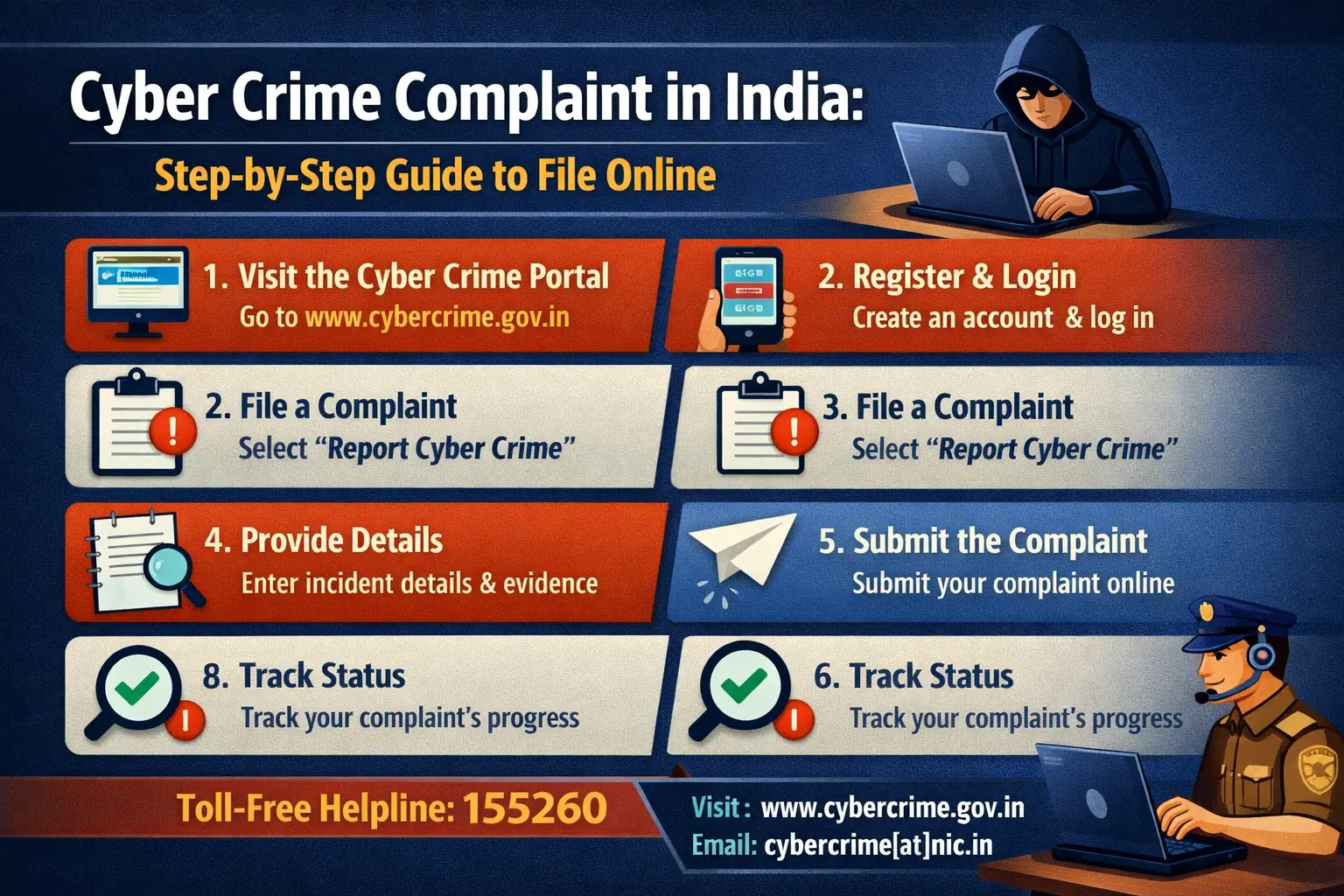
How to File Cyber Crime Complaint Online (Official Process)
Step 1: Visit Cyber Crime Portal
Go to the official National Cyber Crime Reporting Portal.
Step 2: Choose Complaint Type
- Financial fraud
- Social media/other cyber offences
Step 3: Submit Details
- Personal details
- Incident description
- Transaction proof
Step 4: Track Complaint
You will receive a complaint ID for follow-up.
This process is mandatory before escalation.
FIR for Cyber Crime: When Is It Required?
An FIR becomes necessary when:
- Large amount of money is involved
- Police investigation is required
- Cyber complaint does not lead to action
You can file FIR at:
- Local police station
- Cyber crime police station
For legal handling of FIR and investigation, consult our Criminal Law Services.
Can You Recover Lost Money in Cyber Fraud?
Yes—but only under certain conditions.
High Chance of Recovery
- You report within hours
- Money is still in the banking system
Low Chance of Recovery
- Delay in reporting
- Money moved through multiple accounts or crypto
Recovery is not automatic. It depends on speed and coordination.
Legal Action Beyond Complaint
If basic complaint doesn’t work, legal escalation is required.
1. Court Intervention
You can approach court for directions to investigate or recover funds.
2. Banking Dispute Action
If bank negligence is involved, legal action can be taken.
Refer to Banking & Finance Law Services for such disputes.
3. Civil Recovery
In certain cases, civil suits can be filed to recover money.
Why Most Cyber Crime Victims Fail
- They delay reporting
- They rely only on bank support
- They don’t file proper complaint or FIR
- They don’t escalate legally
Fraudsters depend on this delay.
Common Cyber Crime Scams You Should Know
- Fake customer care calls
- KYC update fraud
- QR code scams
- Fake investment apps
- Job offer scams
Most scams exploit urgency and trust.
When Should You Contact a Cyber Crime Lawyer?
You should seek legal help if:
- Money is not recovered after complaint
- Police action is slow or ineffective
- Large financial loss is involved
- Your account or identity is misused
At Lawspicious, we assist clients in cyber fraud recovery, complaint escalation, and legal strategy to protect financial and digital interests.
Call: +91 6289022944
Email: info@lawspicious.com